
Thank you for that other dimension...
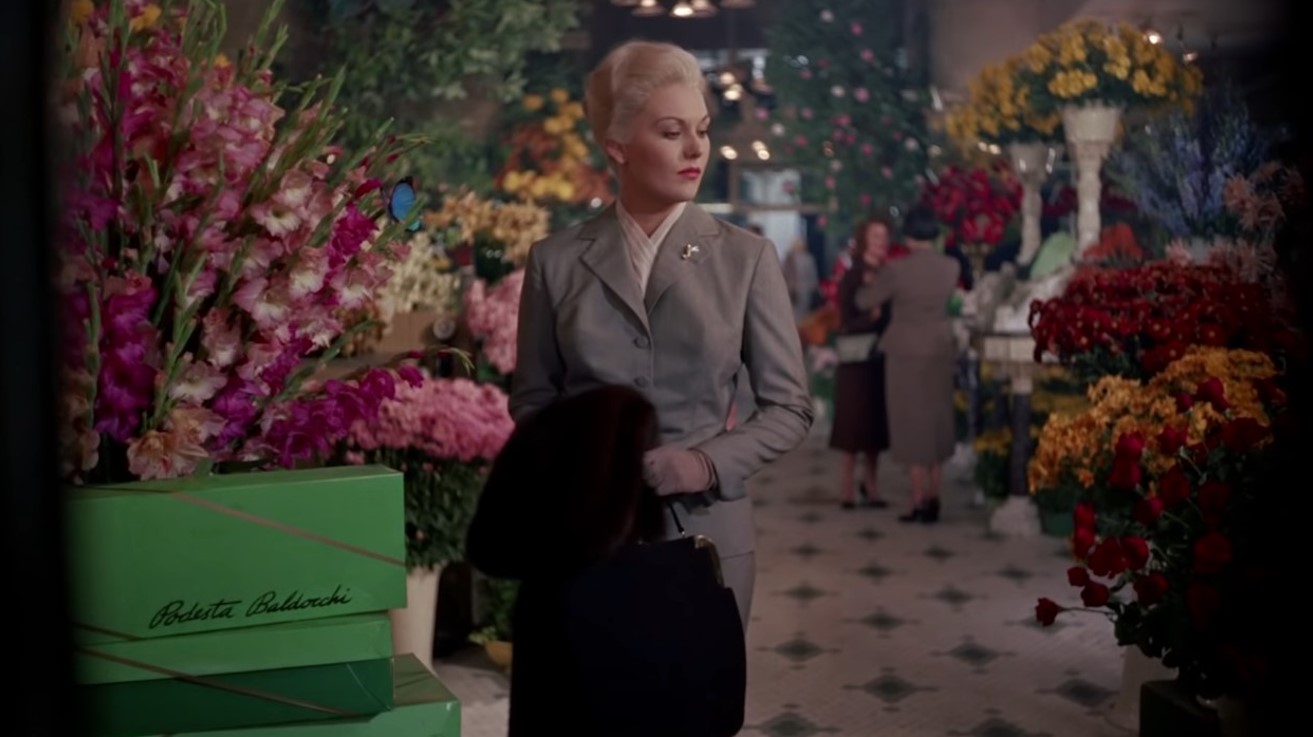
“Madeleine Elster” played by Kim Novak in Vertigo, 1958 (Universal Pictures).
In 2022, I was invited to a Halloween party in the Berkshires. To say that I’ve always loved Halloween is to join a vast community of people who have similarly always loved Halloween. Growing up, we hosted the pre-trick-or-treating portion of the evening (thanks to Mom). From there, the glories of taking on a different body, even a different persona!, would commence.
The lead-up to Halloween was and still is a days- if not weeks-long process of figuring out what I want to be. In 2022, I was at a loss. I suppose because of Covid it had been a couple of years since I dressed up for Halloween. And then, one night … I had a dream.
I dreamt I was in a large warehouse filled with rack upon rack of used clothing. There was no particular order to anything. No women’s section or men’s section, formal or casual, just all kinds of clothing. I searched frantically through each rack for a “costume.” The clock was ticking. In my dream the party was happening in a matter of hours.
I pulled a women’s gray suit jacket off the rack just as a voice behind my shoulder whispered, “You could be Madeleine in Vertigo.” I immediately pictured the bleached-blonde updo. I vaguely remembered the gray skirt suit, the flower bouquet she clung to…. I woke up. I had a costume idea. And I didn’t have hours, I had a whole week to put it together.
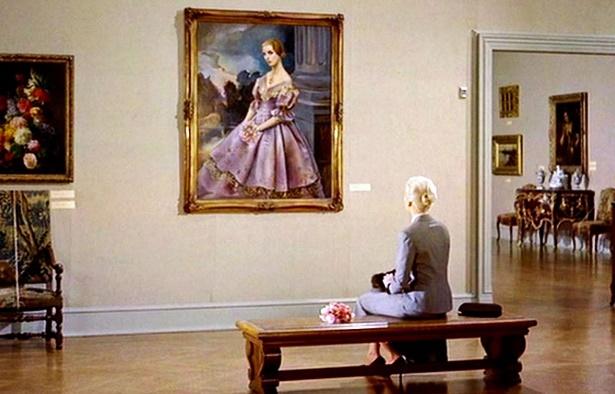
Madeleine sitting before the portrait of her “great-grandmother,” Carlotta Valdes.
What amazes me about the subconscious mind is that it holds so much from the past in layers, some deep, some shallow. In the fall of 2022, I had only just begun writing the novella version of what would become my forthcoming debut novel, The Indecipherables, in which the film Vertigo by Alfred Hitchcock makes a whispered yet prominent appearance.
That same fall, I was also writing a different novel based on the life of my great-grandmother. This too aligned with the character of Madeleine Elster, who is (allegedly) “possessed” by the spirit of her great-grandmother Carlotta Valdes. (For those who have seen Vertigo, you know that there is more than one “costume” being worn here.) The dream was in fact an intersection of two subconscious threads: the book I was writing (and about to abandon) and the book I was beginning to write and would one day publish.
The magical throughline, however, is Alfred Hitchcock. Dreaming of that character, that film, reopened a world of ideas to me. This is because Hitchcock films were a significant part of my growing up. Vertigo was just one of them. The earlier films in black and white leading up to and including Shadow of a Doubt and Strangers on a Train played in the background at home. We saw a re-release of Rope, Hitchcock’s first color film, at a theater in San Francisco and I remember searching the screen for where the long takes had been covertly spliced together. My personal favorites have always been Dial M for Murder and the 1956 The Man Who Knew Too Much.
For me Hitchcock means suspense, even terror, but also a superior visual richness that keeps my eye hooked on what’s in front of me. The stories (adapted from such great writers as Patricia Highsmith and Daphne du Maurier, and many others) had the right amount of trickiness, the expertly placed twist, the gut-wrenching reveal.
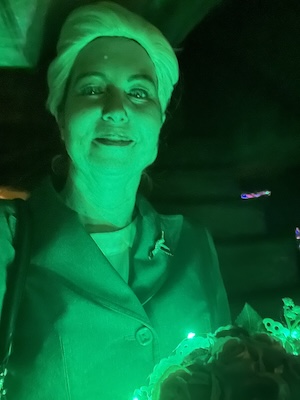
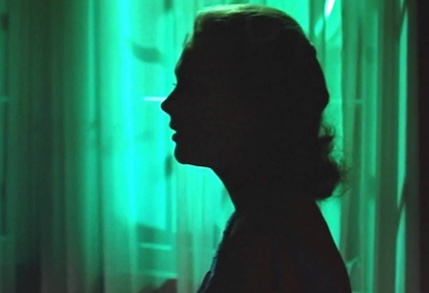
Hitchcock’s symbolic use of color, like Madeleine’s green, made its way into my Halloween costume, as well as into my novel, The Indecipherables.
Likewise, and differently, there is David Lynch. I don’t know which episode of Twin Peaks it was that sealed my love for his style, his story, his randomness, his outrageous violence, and masterful conjuring of fear. I know I will never forget the mix of landscape shots—the forest, the waterfall, the road—with psychological, character-centered scenes. I know I will never forget the moment Mr. Palmer looked into the hallway mirror and became the gasp-inducing, terrifying persona of Bob.
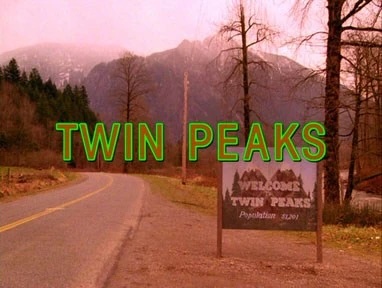
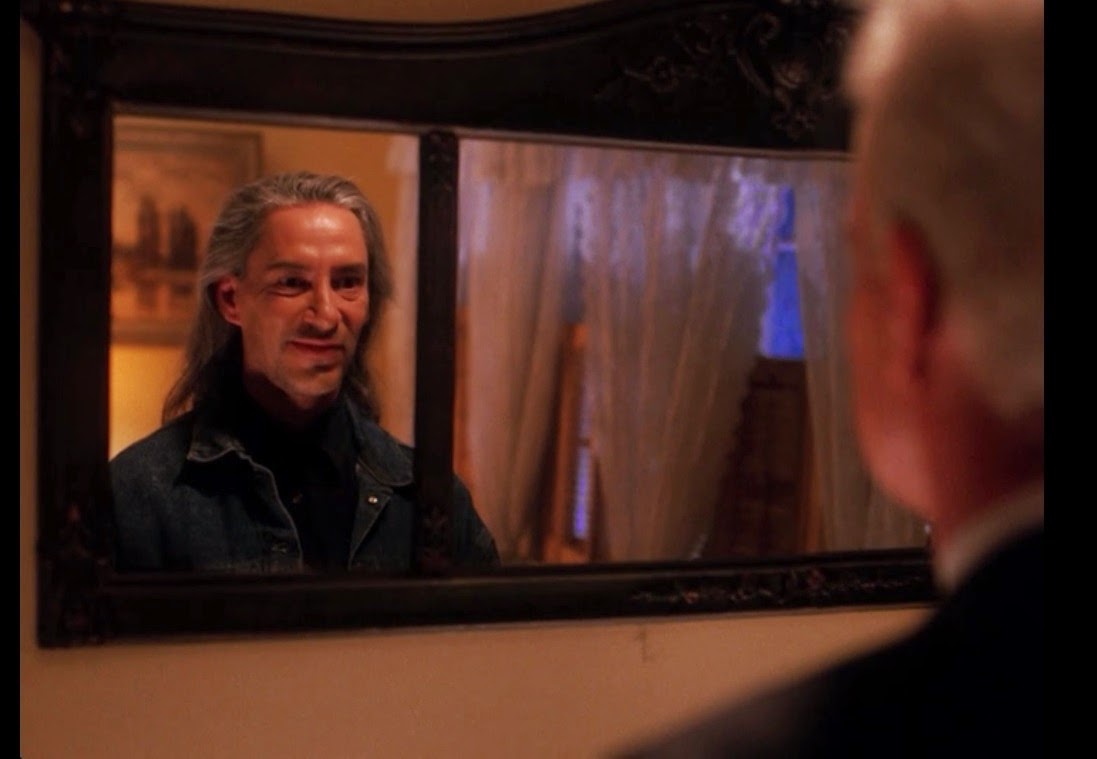
Opening credits; “Bob” (right) from Twin Peaks, 1990.
The music, too. Lynch was and probably still is the best at musical scores. When I was writing The Indecipherables, there was no question music would be intrinsic to my twins’ road trip, just as there was no question there would be dream visions and time warps, thanks to Lost Highway and Mulholland Drive. What surprised me was a moment that came seemingly out of nowhere. One sister recites a poem to the other, and that poem has certain significance in the novel. Only afterward did I realize its muse: Log Lady! Her whispered premonitions, the log in her arms. Sometimes it doesn’t have to be a character, simply a voice.
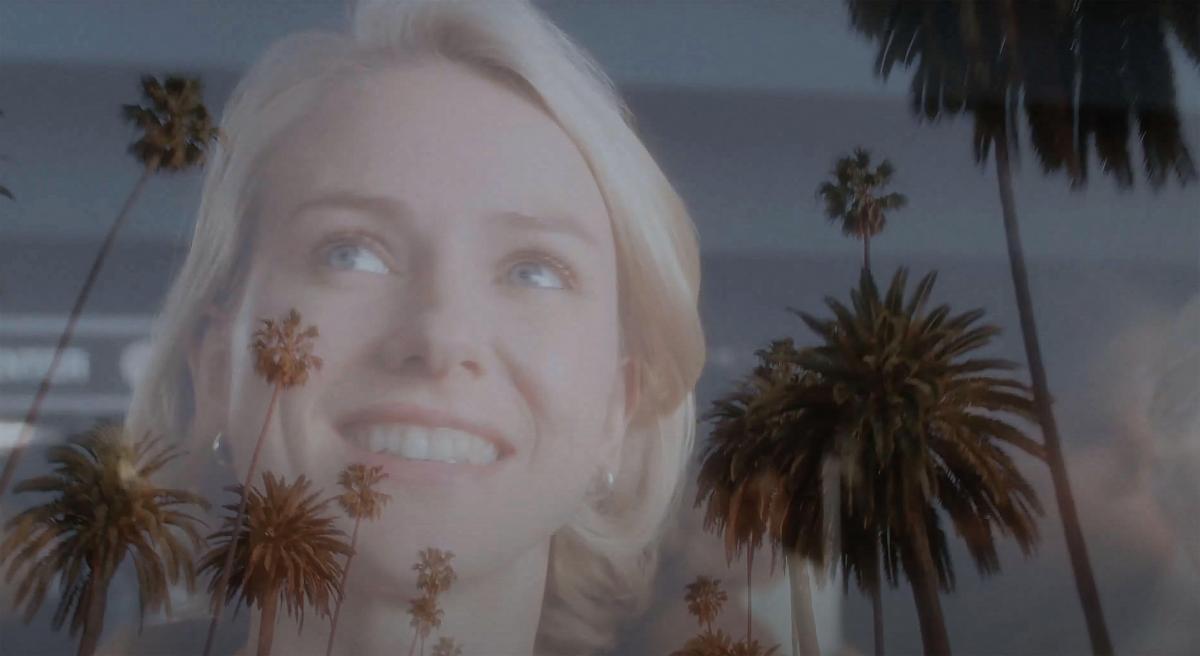
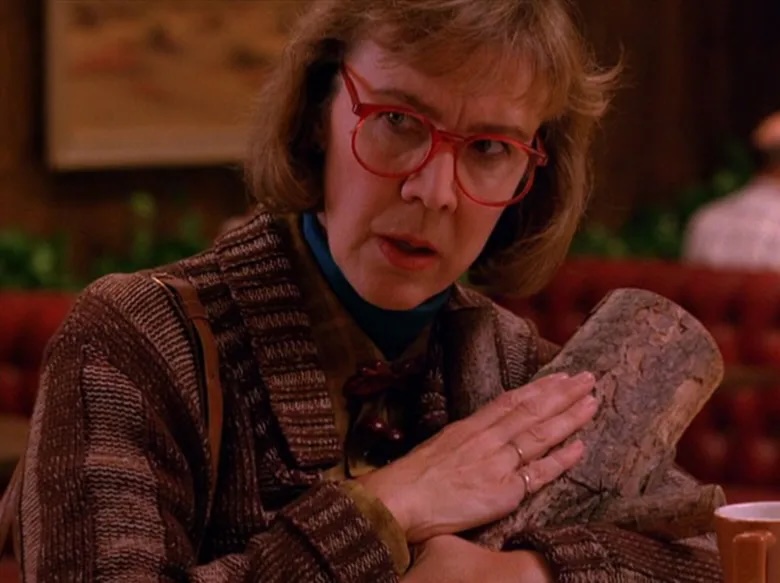
David Lynch’s Mulholland Drive 2001 (left); Log Lady in Lynch’s Twin Peaks, 1990.
Speaking of voices, another unbidden yet meant-to-be influence was that singular narrator of The Twilight Zone, Rod Serling. Very early on, when I was still making notes on my iPhone for this new novel idea I had, the voice of the narrator simply “appeared.” I saw my twin characters from above, driving a car, and the first lines of the novel came to me in a very particular voice. That voice. There was no mistaking it was Serling.
I couldn’t not write it as Rod Serling. (Full disclosure: the narrator is a cross between Serling and a know-it-all A.I. voice, but that’s for another post!) The Twilight Zone was a staple growing up as well. Whenever old episodes were on tv, we tuned in to get spooked. They left indelible impressions on me: “You unlock this door with the key of imagination. Beyond it is another dimension: a dimension of sound, a dimension of sight, a dimension of mind.”
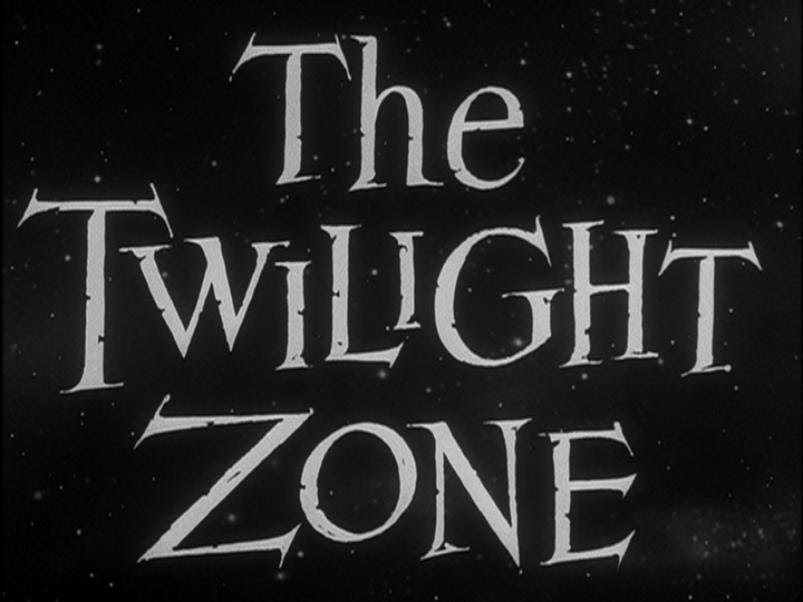
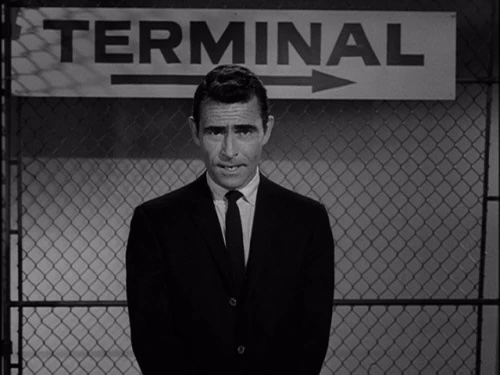
From “The Twilight Zone” season 1 opening credits (left); Rod Serling (right), 1959 (CBS via Getty Images).
Serling truly was the guide to another dimension. The dimension where our dreams become reality. Like Betty Elms’s “dream” in Mulholland Drive, which subverts the entire story we thought we were watching. Like my dream of Madeleine Elster, which not only became my Halloween costume in 2022 but also a part of my new novel.
This coming weekend I’ll climb in the car with my husband and our younger son to visit our older son at Syracuse University. I’m looking forward to it because I miss my son, and parents’ weekend is a lot of fun. I recently learned that Rod Serling was born in Syracuse, and though he only lived there for a few years, I’ll also be looking forward to wending my way north, closer and closer to his ghost.
Visit me on Substack to subscribe for free, thank you!
Preorder The Indecipherables here.